COLOR THEORY
The Science of ccolour, color is a property of ligh. Our eyes see only a small part of the electromagnetic spectrum.
COLOUR= Light-colour
Pigment-colour
Primary: BLUE (cian), MAGENTA AND YELOW.
Secundary: ORANGE, PINK AND GREEN
Showing posts with label art. Show all posts
Showing posts with label art. Show all posts
ESCALAS
ESCALAS


The small exercise is done by tracing the original drawing, then leave 1 centimeter of margin.And in the big exercise what you have to do is draw the big exercise on a large 20 by 20 card,
SHOOTING (My sport)
🔫SHOOTING🔫

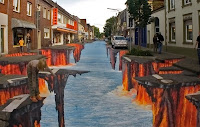

THE DESCRIPTION OF THE PHOTO
THESE ARE THE TRHEE PHOTOS THAT I CHOOSE.

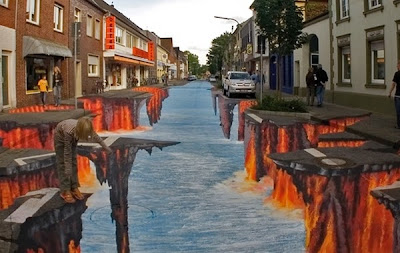

I love these 3 potos, but the fist is so amazing:. In the photo Kurt Wenner has drawn an ocean on the ground. There is water, an octopus, a shark, a bottle, rocks… I choose this photo because I love it. I also like it because I think there is real water, and suddenly you´re going to fall into the water with the animals. In the photo we can see as if someone is throwing a bottle into the wáter.
I love these 3 potos, but the fist is so amazing:. In the photo Kurt Wenner has drawn an ocean on the ground. There is water, an octopus, a shark, a bottle, rocks… I choose this photo because I love it. I also like it because I think there is real water, and suddenly you´re going to fall into the water with the animals. In the photo we can see as if someone is throwing a bottle into the wáter.
COLOUR PIGMENT
🎨 EGYPTIAN BLUE
Brief description of Egyptian blue: Very stable synthetical pigment of varying blue colour. It was the first synthetic pigment and the most extensively used from the early dynasties in Egypt until the end of the Roman period in Europe.

Egyptian blue (Antiquity (Egyptians) - Antiquity (Romans). Names for Egyptian blue:
(Non-English names:)
GERMAN: Ägyptisch Blau FRENCH: Bleu Egyptien ITALIAN: Bue egiziano
Brief description of Egyptian blue: Very stable synthetical pigment of varying blue colour. It was the first synthetic pigment and the most extensively used from the early dynasties in Egypt until the end of the Roman period in Europe.

Egyptian blue (Antiquity (Egyptians) - Antiquity (Romans). Names for Egyptian blue:
(Non-English names:)
GERMAN: Ägyptisch Blau FRENCH: Bleu Egyptien ITALIAN: Bue egiziano
| Blue is a primary colour in painting, with the secondary color orange as its complement. It is in the visible spectrum at wavelengths in the range of 440–490 nm. This color can be painted with tempera and watercolour. THE TECHNIQUE THAT I WILL CHOOSE IS: TEMPERA Egg tempera:Egg tempera is known for its linear qualities and capacity to produce jewel-like paintings. In some ways, egg tempera shares more commonalities with pastels or colored pencils than with acrylics, oils, or watercolor paints. Egg tempera is a classic painting technique, tracing back to antiquity. Egg tempera is composed of ground pigment, water, and egg yolk. |
SELF-ASSESSMENT (ART)
1. What can I do that I couldn't do before?
I can make stars and polygons with the compass.
2. What do I like most?
I like symmetry , because I think it's easier than geometry.
3. What do I do well?
I draw polygons well.
4. What do I need help with?
I need help with stars.
5. What do I do in English autside the class?
I go to Engish and maths classes in the evening and I go to zumba classes.
6. What do I need improve?
I need to improve my listening.
7. What did I learn about culture?
I learned about festivals.
I can make stars and polygons with the compass.
2. What do I like most?
I like symmetry , because I think it's easier than geometry.
3. What do I do well?
I draw polygons well.
4. What do I need help with?
I need help with stars.
5. What do I do in English autside the class?
I go to Engish and maths classes in the evening and I go to zumba classes.
6. What do I need improve?
I need to improve my listening.
7. What did I learn about culture?
I learned about festivals.


THE SYMMETRY
SYMMETRY: It´s quality of shapes which some of their parts are reflections of others.
REFLECTION SYMMETRY: It is a shapes quality which it is formed by two halves facing each other with an axis or fold line in between as il both sides were mirror images of each other.
SYMMETRY AXIS: It is line which divides a shapes into two symmetric halves. Every element of the shape is reflected on the other side and at the same distance from the axis. Symmetry point are on perpendicular line to it.
CENTRAL SYMMETRY: It is the refection of an objet throught a point called the symmetry center. Evry symmetry point is on the other side and at same distance from the center of symmetry. Symmetry pairs of points are collinear whith the centre.
GEOMETRIC SYMMETRY: It is a kind of symmetry which follows accuarately the geometric symmetry rules.
APPARENT SYMMETRY: It is obvious symmetry but not every point or element follows accuarately the geometric symmetry rules. It happens very frequently in nature.
SYMMETRICAL BALANCE: It is away to organize parts of on image, picture or drawing so 1 side duplicates or mirrors the other.
REFLECTION SYMMETRY: It is a shapes quality which it is formed by two halves facing each other with an axis or fold line in between as il both sides were mirror images of each other.
SYMMETRY AXIS: It is line which divides a shapes into two symmetric halves. Every element of the shape is reflected on the other side and at the same distance from the axis. Symmetry point are on perpendicular line to it.
CENTRAL SYMMETRY: It is the refection of an objet throught a point called the symmetry center. Evry symmetry point is on the other side and at same distance from the center of symmetry. Symmetry pairs of points are collinear whith the centre.
GEOMETRIC SYMMETRY: It is a kind of symmetry which follows accuarately the geometric symmetry rules.
APPARENT SYMMETRY: It is obvious symmetry but not every point or element follows accuarately the geometric symmetry rules. It happens very frequently in nature.
SYMMETRICAL BALANCE: It is away to organize parts of on image, picture or drawing so 1 side duplicates or mirrors the other.
BLADES
I made the first blade making circles.
The first thing I did is to make a circle in the middle and then I have been doing circles around it, clicking on the side of the circle


The first thing I did is to make a circle in the middle and then I have been doing circles around it, clicking on the side of the circle

The second blade that I made by making points on the whole sheet and then joining them forming triangles.


Halloween
Halloween is a celebration on the night of October 31st. It is most practiced in the United States and Canada. Children wear costumes and go to people's homes saying "Trick or treat!" to ask for candy (sweets in the UK) and people give it to them. The suggestion is: "Give me a treat or I will play a trick on you." People mainly dress up as ghosts, witches, or other scary things for Halloween.
The people wear a costume for witches, goast, zombies...

The people wear a costume for witches, goast, zombies...
Vocabulary
☺VOCABULARY
Geometry: It is an area of knowledge which any elements, and operation in the plane such as points.
Point: In geometry a point can be defined as the place or location where two lines insersect.
Line: A one dimensional objet formed of infinitive points.
Ray: A line whih begins at a particular point .
End point: al wich a line segment a ray ends or starts.
Mindpoint: Is the point that is halfway between the endpoint of the line segment.
Line segment: It is a line whose point follow the same direccion .
Straight line: It is a line whose points follow the same direcction
Plane: It is a 2 Surface
Length: Measurement of something from from end to end
GEOMETRY DRAWING AND SUPPLIES CONCEPT AND DEFINITION.
Line/ techical drawing: It is a drawing made with the help of supplies
Compass: It is a tool for drawing circules and arcs and also for meansuring distances between points
Protactor: An instrument for measuring or drawing
Star Polygons : It s a particular polygons case with a star form or shape
Inscribed Polygons: They are polygons placed inside circles
Circumscribed: They are polygons sorrouding a circle be ing it sides tangent to the circle insides
Geometry: It is an area of knowledge which any elements, and operation in the plane such as points.
Point: In geometry a point can be defined as the place or location where two lines insersect.
Line: A one dimensional objet formed of infinitive points.
Ray: A line whih begins at a particular point .
End point: al wich a line segment a ray ends or starts.
Mindpoint: Is the point that is halfway between the endpoint of the line segment.
Line segment: It is a line whose point follow the same direccion .
Straight line: It is a line whose points follow the same direcction
Plane: It is a 2 Surface
Length: Measurement of something from from end to end
GEOMETRY DRAWING AND SUPPLIES CONCEPT AND DEFINITION.
Line/ techical drawing: It is a drawing made with the help of supplies
Compass: It is a tool for drawing circules and arcs and also for meansuring distances between points
Protactor: An instrument for measuring or drawing
Star Polygons : It s a particular polygons case with a star form or shape
Inscribed Polygons: They are polygons placed inside circles
Circumscribed: They are polygons sorrouding a circle be ing it sides tangent to the circle insides
Subscribe to:
Posts (Atom)

-
The Olympic Games of Berlin 1936 🚴 ● Berlin 1936 Olympic Games, athletic festival held in Berlin that took place August 1–16, 1936. Th...
-
GOT TALENT VIDEO (click on the word´VIDEO´)
-
SELF-ASSESSMENT ( SECOND TERM) 🎶 📄 1- WHAT CAN I DO THAT I COULDN'T DO BEFORE? Now I can know about: Principles os ...
